
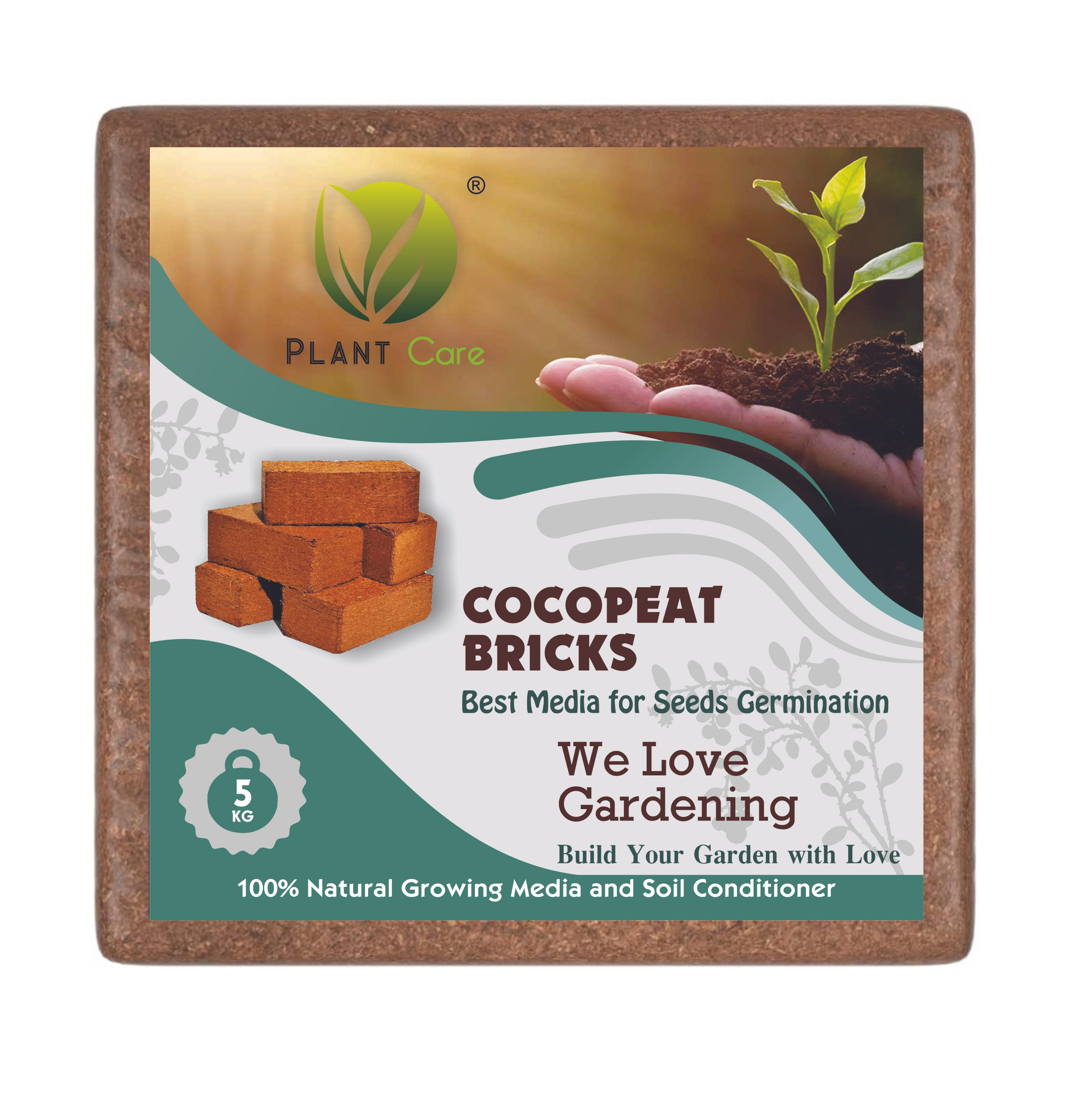
Cocopeat is made from coconut coir and is used as a growing medium or as part of a potting mix. If you have a compressed brick, the first step is to hydrate it evenly. After that, decide whether the prepared cocopeat suits your planting method on its own or should be blended with other ingredients.
Prepare a cocopeat brick
The Plant Care Cocopeat Bricks product page describes a 5 kg compressed block and gives these preparation directions: place the brick in a container, add about 25 litres of water, allow 20–30 minutes for absorption, then loosen the material. The page estimates about 75 litres of prepared cocopeat from a brick. Follow the current package directions if they differ, and use a container large enough to hold the expanded material.
- Put the brick in a sturdy tub or bucket with room for it to expand.
- Add water gradually so the brick can absorb it. Avoid flooding the container at the start.
- Wait for the coir to soften, then break up and fluff the material by hand or with a clean tool.
- Check the texture throughout. If dry compressed sections remain, add a little more water and give them time to absorb.
Use cocopeat by itself or as part of a mix
Prepared cocopeat can be used as a growing medium in the applications listed on the product page, including seed starting and container planting. It can also be mixed with soil or compost. The right choice depends on the plant, container and watering routine: a medium that holds moisture well may need different watering from a fast-draining mix.
Cocopeat is not automatically a complete source of plant nutrition. If you use it as the main medium, plan how the plants will receive the nutrients they need. If you blend it with soil or compost, choose proportions based on the crop and growing conditions rather than assuming one recipe fits every pot.
Avoid these common mistakes
- Using a dry or partly hydrated brick: dry pockets can make it harder to fill cells and pots evenly.
- Compressing the prepared medium tightly: leave it loose enough to fill the container without forcing it down.
- Overwatering because cocopeat looks dry on the surface: check moisture below the surface and make sure excess water can drain.
- Forgetting labels in seed trays: mark the seed variety and sowing date before cells become difficult to identify.
Loose cocopeat or a compressed brick?
A brick is compact to store and needs water and preparation before use. Plant Care also lists loose low-EC cocopeat for gardeners who prefer a loose format. Review the product page for its current packaging and details before ordering.
Common questions
Can I use cocopeat in a seed tray?
The product information lists seed starting as one use. Prepare and loosen the material first, and follow the needs of the seed variety you are sowing.
Do I need to add water to loose cocopeat?
The loose product is already sold in loose form, but check its condition and package instructions. The hydration steps above apply to the compressed brick.
Can cocopeat be mixed with soil?
Yes. Plant Care’s product information says cocopeat can be mixed with soil or compost. Choose a blend suitable for the plant and make sure the container drains.
Prepare your growing medium
Compare cocopeat bricks with loose low-EC cocopeat and select the format that fits your garden.