
Starting seeds in a tray makes it easier to keep young plants together, label varieties and move seedlings when they are ready. The method is simple, but seed depth, moisture and light should follow the needs of the plant you are growing. This guide covers the basics for a home garden or nursery setup.
Choose a tray and growing medium
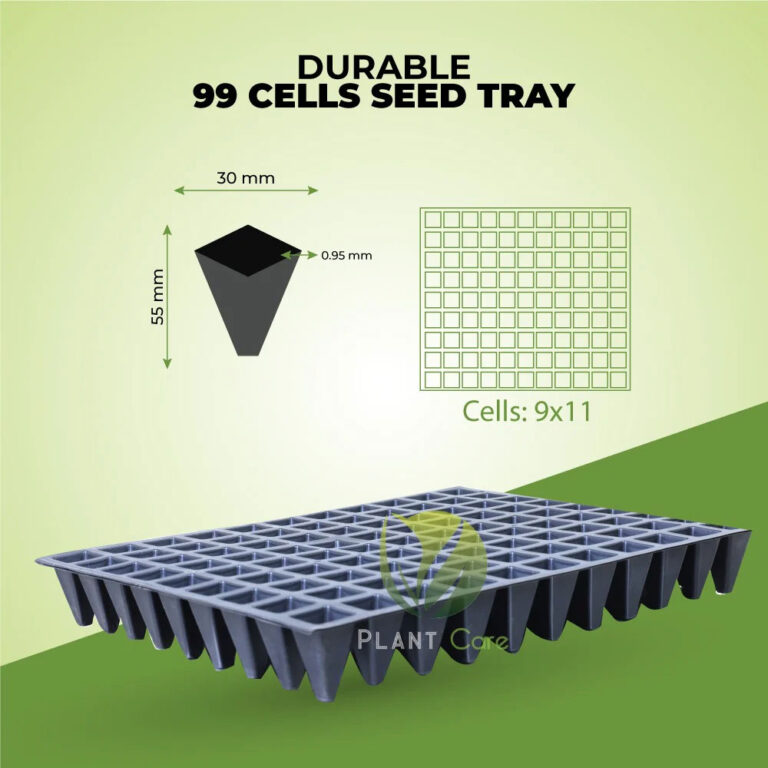
Plant Care lists seeding trays with different cavity counts and thicknesses, including a 99-cavity, 0.95 mm seeding tray and 104-cavity tray. Compare the product details with the number of seedlings you plan to start and the space available. A separate cell for each seedling can make handling and transplanting more straightforward.
Use a clean tray and a fine, suitable seed-starting medium. A medium made for seed starting is easier to work with in small cells than dense garden soil. The University of Minnesota Extension seed-starting guide also recommends a tray with drainage and a light seed-starting mix; see its seed-starting supply list and care notes.
How to sow seeds in a tray
- Moisten the growing medium so it is evenly damp, then fill each cell without packing it hard.
- Check the seed packet for sowing depth and whether the seed needs light. Put the seed at the specified depth; there is no single depth that suits every seed.
- Label each row or group with the plant name and sowing date. This helps you keep varieties and timing straight.
- Water gently so the seed stays in place. If the tray has drainage, let excess water escape and empty any standing water from the outer tray.
Care for seedlings after sowing
Place the tray where the seeds receive the light and warmth recommended for their variety. A bright window or protected growing area may work, but watch for stretching, drying cells or harsh afternoon heat. Check moisture regularly: small cells can dry faster than large pots. Keep the medium moist, not saturated, and use gentle watering so new roots are not disturbed.
Once seedlings emerge, give them consistent light and enough space for air to move around them. Follow the seed packet or local growing advice for thinning and transplant timing. Before moving seedlings outdoors, gradually expose them to outdoor conditions if they have been raised in a protected indoor area.
Moving seedlings without unnecessary root disturbance
Water the tray lightly before transplanting if the medium is dry. Ease each seedling out by supporting the medium around its roots rather than pulling on the stem. Place it into a prepared pot, grow bag or garden bed at the depth suited to that plant, then water it in. A 15 × 15 inch nursery bag is one of the planting-container options in Plant Care’s catalog; choose a container that suits the plant’s later growth and your available space.
Common questions
Should I sow one seed or several in each cell?
Follow the seed packet. If more than one seed is sown and several germinate, thin according to the plant’s needs instead of crowding the seedlings.
How often should I water a seed tray?
Check the medium rather than following a fixed calendar. Water when it is beginning to dry, and avoid leaving cells waterlogged.
When should seedlings leave the tray?
Use the seed variety’s guidance and the seedlings’ condition. Move them when they can be handled safely and the next container or bed is ready.
Start your next batch
For home sowing or nursery propagation, compare the 99-cavity seeding tray and 104-cavity seedling tray. Check the product pages for current specifications and availability.